4 Feb 2025
Aluminium versus steel – a comparison of lightweight and durable materials
For decades, aluminium and steel have competed for the title of the most important industrial material. Each has its strengths and unique applications.
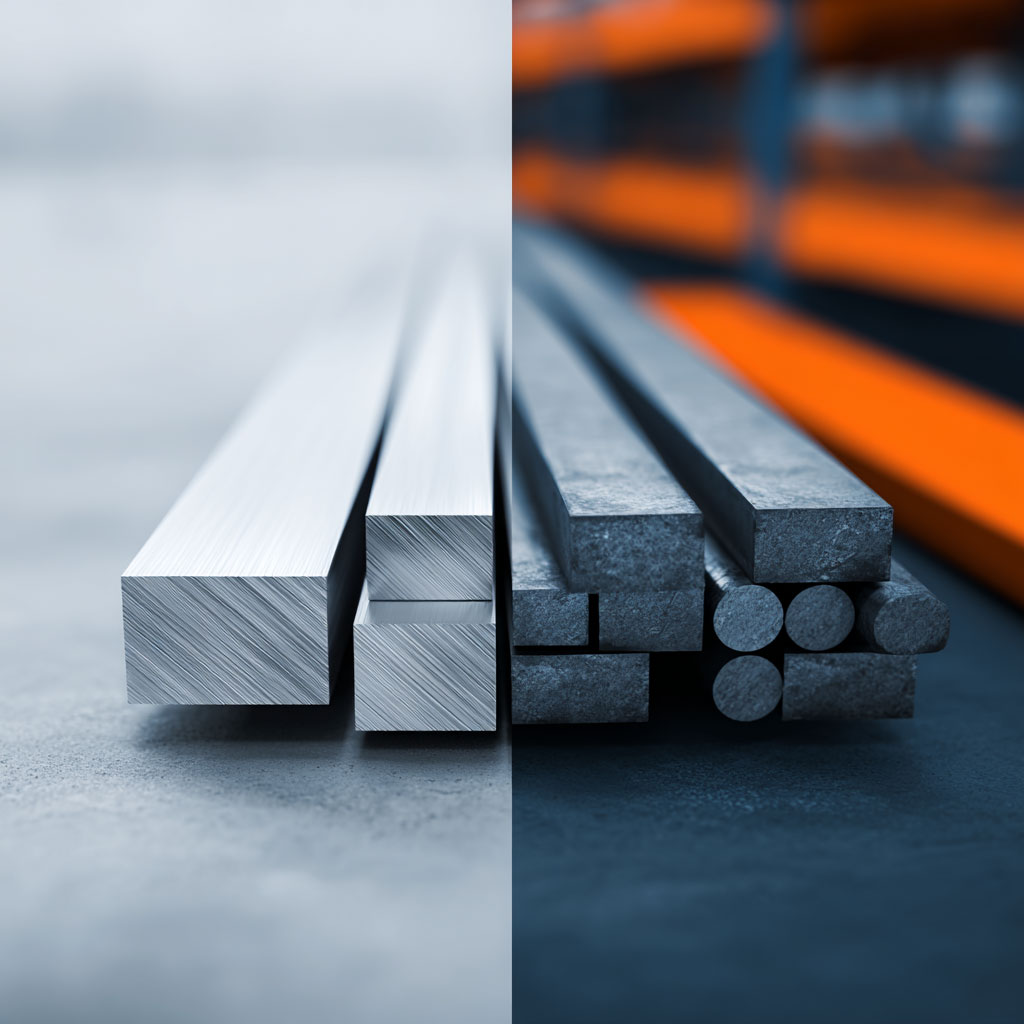
Two Pillars of Modern Industry
Steel and aluminium are materials that drive the world – from the construction of bridges and skyscrapers, to cars and aeroplanes, and even everyday electronics. Although they might seem similar at first glance, their properties mean they are used in completely different contexts.
Aluminium – Lightness and Conductivity
Aluminium is three times lighter than steel while being resistant to corrosion. This makes it excellently suited for industries where weight plays a crucial role – such as aviation, automotive, or packaging production. Due to its high electrical conductivity, it is also used in the energy sector, for example, in high-voltage transmission lines.
Steel – Indispensable Strength
Steel is significantly harder and more mechanically resilient than aluminium. Hence, it forms the foundation of bridge and building constructions, industrial machinery, and railway infrastructure. Steel is also easy to process and relatively inexpensive, making it the most commonly used construction material worldwide.
Recycling – A Common Advantage
Both steel and aluminium can be recycled nearly indefinitely. This is a huge advantage in times of rising ecological awareness and the pursuit of a circular economy. Interestingly, over 70% of the aluminium ever produced is still in circulation.
Comparison of Key Features
Weight: Aluminium is 3 times lighter than steel, affecting energy consumption in transportation.
Strength: Steel is much stronger and more resistant to mechanical loads.
Corrosion Resistance: Aluminium naturally forms a protective layer, while steel requires additional protection.
Applications: Steel in heavy constructions and infrastructure, aluminium in transport, energy, and electronics.
Recycling: Both materials are fully recyclable, making them environmentally friendly.
Conclusion
Aluminium and steel do not compete over which is “better”. Rather, they are two different approaches to solving industrial problems. Where lightness and conductivity matter – aluminium prevails. Where strength and low cost are key – steel stands unmatched. Together, they form a duo without which the modern world could not function.